LANDE has officially expanded into Poland — our fourth market launch and one of the most strategically important steps in the company’s development so far.
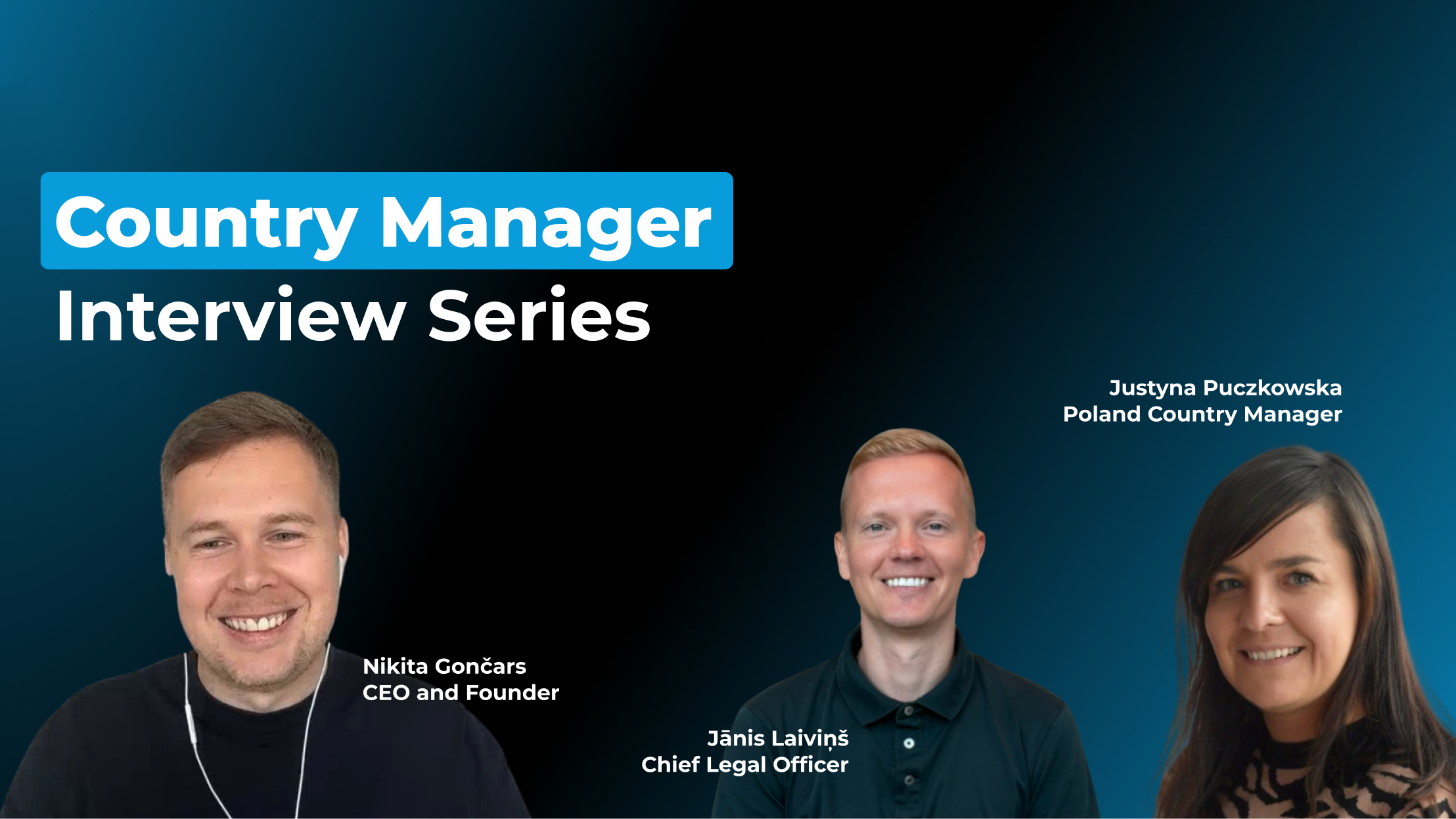
To discuss the reasoning behind the expansion, lessons learned from previous markets, and how we are approaching risk management in Poland, we sat down with:
- Janis Laivins, Head of Legal and one of the key people behind previous LANDE market launches
- Justyna Puczkowska, LANDE Poland Country Manager with more than 10 years of experience in agricultural lending and agribusiness
Full discussion on Youtube: Why Poland? Inside LANDE’s Most Prepared Market Launch Yet
Below is a summary of the discussion and the key insights shared with investors.
Why Poland?
According to Janis, Poland was a natural next step for LANDE for several reasons.
“Poland has one of the strongest economies in the region and one of the largest agricultural sectors in Europe. There is significant demand for financing among farms, especially for flexible solutions that traditional institutions often cannot provide efficiently.”
In addition to the size of the market, Poland is geographically and culturally close to the Baltics, which makes operational cooperation significantly easier. The proximity also allows the headquarters team to work closely with the local Polish team through frequent visits, workshops, and training sessions.
Learning From Previous Markets
One of the strongest themes throughout the discussion was that Poland represents a much more mature and disciplined expansion strategy compared to earlier launches.
Janis openly acknowledged that previous launches in Lithuania and Romania happened under very different circumstances.
“In earlier years, we had fewer resources and we wanted to move fast. We probably took more risks than we should have. Poland is different. This time we deliberately chose a slower and more conservative approach.”
Before launching operations, the team spent months conducting market research, meeting agricultural businesses, analysing competitors, and consulting with multiple legal firms specialising in:
- lending law,
- crowdfunding regulation,
- and agricultural financing.
The recruitment process was also significantly more selective than before.
“We did not rush hiring. We spent a lot of time finding experienced people who already understand agricultural lending. In Poland, we didn’t have to teach the market to the team — the team taught us.”
That local expertise became one of the key advantages of the launch.
A Conservative Approach To Investor Safety
The Polish portfolio has been built from day one with a clear focus on capital protection and conservative underwriting.
Unlike some earlier periods in LANDE’s history where higher-risk products were tested, Poland is focused primarily on collateral-backed lending secured by agricultural land and real estate.
“We already know from our historical data that land-backed loans have the best performance across all our markets,” Janis explained.
Most Polish loans are structured with:
- real estate mortgage collateral,
- conservative loan-to-value ratios,
- detailed financial analysis,
- and additional legal protections.
One important mechanism highlighted during the discussion is the so-called “777 notarial deed” used in Poland.
This legal structure allows much faster enforcement in case of default and significantly reduces recovery delays compared to traditional court procedures.
“For investors, this means stronger legal enforceability from the very beginning of the loan structure.”
Why Farmers Are Responding Positively
For Justyna, the market response after the launch has exceeded expectations.
“Every month we are above our targets. Demand is stronger than we initially expected.”
One of the key differences in Poland is LANDE’s broker-based acquisition strategy. Instead of relying heavily on broad advertising campaigns, the company cooperates with agricultural brokers who already have direct relationships with farmers.
This creates several advantages:
- better lead quality,
- pre-screened borrowers,
- lower acquisition costs,
- and stronger long-term relationships.
According to Justyna, farmers are primarily attracted by:
- faster financing decisions,
- flexibility,
- understanding of agricultural seasonality,
- and communication with specialists who understand the realities of farming businesses.
“Farmers appreciate that we speak their language. We understand the business and can adapt financing structures to their actual cash flow cycles.”
How LANDE Evaluates Borrowers In Poland
Although LANDE aims to keep the financing process simple and fast, the underwriting itself remains highly disciplined.
The Polish team analyses:
- annual income,
- existing liabilities,
- crop structure,
- sales invoices,
- external databases,
- and borrower credit history.
“We focus only on the most important information, but we analyse it deeply,” Justyna explained.
The goal is to combine:
- speed,
- automation,
- and strict risk controls.
At the same time, the company intentionally prioritises sustainable portfolio growth over rapid expansion.
“We are not trying to grow aggressively at any cost. We want to build a healthy portfolio from the very beginning.”
Default Expectations And Portfolio Quality
Based on historical portfolio performance and the secured nature of the Polish loans, LANDE expects the Polish portfolio to maintain a default rate below 3%.
“Patience, disciplined underwriting, and good collateral are the key elements.”
The Agricultural Land Market In Poland
A large part of the Polish strategy is based on the strength and liquidity of agricultural land itself.
According to Justyna:
- average agricultural land prices in Poland are around €15,500 per hectare,
- prices vary significantly by region and land quality,
- and demand for farmland remains consistently strong.
“Farmers always want to acquire additional land, and in many regions it is difficult to find available land for purchase. Liquidity is very good.”
For valuation purposes, LANDE uses official government agricultural pricing references divided across Poland’s 16 regions and land quality classifications.
Poland’s Long-Term Potential
Both Janis and Justyna expressed strong optimism about Poland becoming one of LANDE’s most important growth markets.
The current target for 2026 is to issue approximately €3.5–4 million in loans, and according to the team, the company is already approaching half of that target by May.
But beyond short-term numbers, Poland also offers several structural advantages:
- one of the youngest farming populations in Europe,
- strong agricultural modernization programs,
- large-scale EU support initiatives,
- and increasing demand for flexible financing solutions.
The company is also exploring partnerships related to young farmer programs and broader agricultural development initiatives across Europe.
A More Mature LANDE
Poland market launch represents a more experienced version of LANDE.
The company now operates with:
- more resources,
- more market knowledge,
- stronger legal structures,
- better underwriting discipline,
- and a significantly more conservative approach to growth.
“We are trying to build Poland in the best possible way from day one,” Nikita concluded during the discussion. “We learned from previous mistakes, we took our time, and now we want to focus on sustainable long-term growth and delivering the best possible results to investors.”
For investors, Poland expansion story is also a reflection of how LANDE itself has matured.